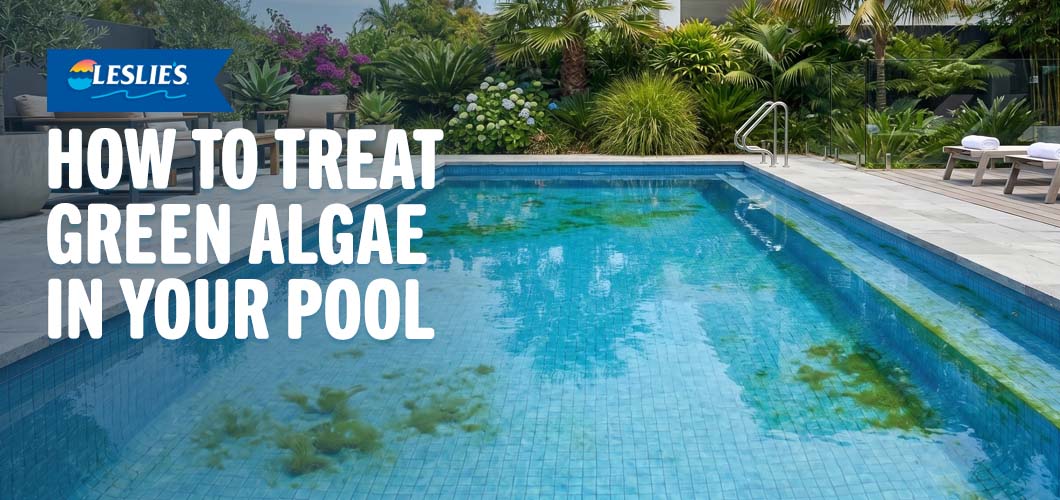
How to Treat Green Algae in Your Pool
Green is great for grass, trees, and guacamole. Your pool? Not so much. If your pool water has turned cloudy, dull, or full-on swampy green, there’s a good chance you’re dealing with green algae.
The good news is that green algae is the most common type of pool algae, and compared to yellow or black algae, it’s usually the easiest to treat. The key is acting quickly. Green algae can spread fast when your water isn’t properly balanced, your sanitizer level is low, or your pool circulation needs a boost.
In this article, we’ll explain what green algae is, why it shows up, how to treat it, and how to keep it from coming back.
What is Green Algae?
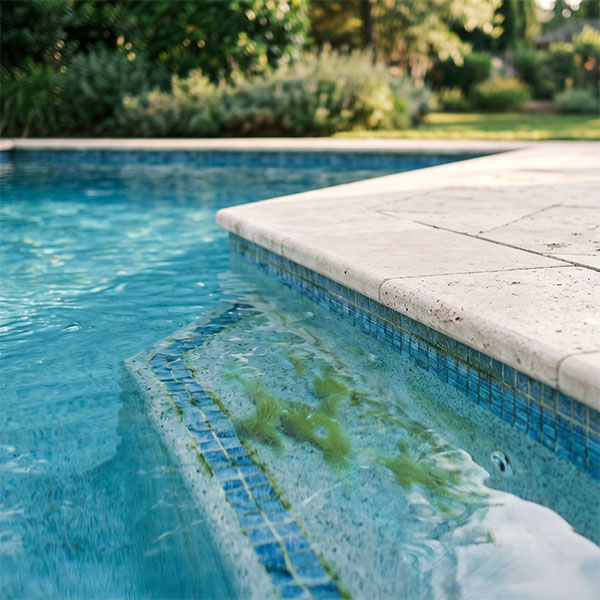
Green algae is a living organic contaminant that grows in pool water and on pool surfaces. It can make your water look cloudy, hazy, light green, dark green, or even thick and murky in severe cases. You may also notice slippery walls, green patches on steps, or algae clinging to corners and other low-circulation areas.
Green algae is the most common type of pool algae. It’s also the easiest to kill when treated properly. But don’t let that fool you into waiting. Once green algae begins to bloom, it can multiply quickly and make your pool unsafe, unsanitary, and uninviting.
A green pool is more than just an eyesore. Algae can damage pool surfaces, clog your filter, consume sanitizer, and create an environment where bacteria and other contaminants can thrive. The sooner you treat it, the easier it is to get your water back to clear.
Where Does Green Algae Come From?
Green algae spores can enter your pool through wind, rain, storms, dirt, debris, swimsuits, pool toys, and even contaminated equipment. Once algae spores are in the water, they wait for the right conditions to grow.

Common causes of green algae include:
- Low Free Available Chlorine levels
- Poor water circulation
- Dirty or clogged filters
- Warm weather and direct sunlight
- Heavy rain or storm debris
- High phosphate levels
- Improper water balance
- Skipping weekly brushing or shocking
Green algae often shows up after heavy pool use, a stretch of hot weather, or a storm. It can also grow in “dead spots” where water doesn’t circulate well, such as behind ladders, around steps, in corners, or near skimmers and returns.
Treating Green Algae
Now for the part everyone wants: getting that green out of your pool. Treating green algae takes the right products, strong circulation, thorough brushing, and a little patience. Depending on how severe the algae bloom is, it may take a couple of days for your water to fully clear.
Before getting started, visit your local Leslie’s with a water sample for a free water test. This will help identify any water balance issues, sanitizer problems, or high phosphate levels that may be contributing to the algae bloom.
Needed Supplies
Before treating green algae, gather the following supplies:
- Test kit or test strips
- Green Algae Removal Bundle
- This bundle contains Leslie's Algae Control, Power Powder Plus shock, and Clear Aid clarifier.
- Pool brush and pole
- Green to Clean
- Balancing chemicals
- Filter cleaner
- Pool vacuum
- Perfect Weekly
PRO TIP: Algae removal is easier when you have the right products on hand. Leslie’s Algae Removal Bundles and Algae Cleanup Bundles include the key products you need to treat green, yellow, or black algae and help bring your pool water back to clear.
1. Check Your Filter and Run the Pump
Before adding any algae treatment products, make sure your pool filter is clean and ready to work. Algae treatment sends dead algae and debris into the water, and your filter needs to be able to capture it.
Backwash your sand or D.E. filter, or rinse and clean your cartridge filter if needed. Then turn on your pool pump and let it run continuously throughout the algae treatment process. For best results, run your pump for at least 36–48 hours while treating green algae.
Strong circulation helps move chemicals throughout the pool, prevents algae from settling, and gives your filter more opportunities to remove dead algae from the water.
2. Test and Balance the Water
Testing and balancing your pool water is an important step before adding algae treatment products. If your water chemistry is off, your treatment may not work as effectively.
Test your pool water and adjust the levels as needed. For green algae treatment, use the following recommended ranges:
- pH: 7.8 or higher
- Total Alkalinity: 80–120 ppm
- Cyanuric Acid: 25–75 ppm
- Free Available Chlorine: 2.0–2.5 ppm
3. Brush the Pool Thoroughly
Time to break up the green gunk. Brushing is one of the most important parts of algae removal because it loosens algae from pool surfaces and exposes it to treatment products.
Brush the walls, floor, steps, ladders, corners, skimmer areas, and anywhere algae is visible. Pay extra attention to low-circulation areas where algae likes to cling.
When you’re done brushing, leave the brush attachment in the pool during treatment to help sanitize the brush, too. Algae can cling to pool tools, so it’s important to clean anything that touched the algae.
4. Add Green Algae Treatment
After brushing, treat your pool with a green algae treatment product, like Green to Clean. Always read and follow the product label instructions for dosage and application. In general, apply half of the recommended amount around the perimeter of the pool, starting where the algae is thickest. Then apply the remaining amount directly over problem areas.
Wait about five minutes after adding the treatment before moving on to the next step.
5. Shock the Pool
Next, it’s time to shock the pool. Pool shock raises the sanitizer level high enough to help kill algae and oxidize organic contaminants in the water.
Use a calcium hypochlorite shock, such as Leslie’s Power Powder Plus. For green algae treatment, use 2 pounds of shock per 15,000 gallons of pool water. For best results, shock the pool three times, waiting 12 hours between each application.
Here’s the general schedule:
- Add the first dose of shock.
- Wait 12 hours.
- Add the second dose of shock.
- Wait 12 hours.
- Add the third dose of shock.
Keep the pump running during the entire process. Do not swim while treating algae, and wait until sanitizer levels return to a safe range before using the pool again.
6. Check Phosphate Levels
After the final shock treatment has circulated for 12 hours, test your phosphate level. Phosphates are algae food, and high phosphate levels can make it easier for algae to return. If phosphates are above 300 ppb, use a phosphate remover, like Leslie's No Phos, to lower the level. Ideally, phosphate levels should be below 100 ppb to help prevent future algae growth.
This step is especially important if your pool has recurring algae problems, heavy debris, frequent storms, or lots of organic contaminants.
7. Clean the Filter Again
Once the algae treatment has circulated, your filter has likely collected a lot of dead algae and debris. Give it another cleaning to help restore proper flow and filtration.
Backwash your sand or D.E. filter, or clean your cartridge filter thoroughly. If your pool was very green, you may need to clean the filter more than once during the clearing process.
After cleaning the filter, turn the pump back on and continue circulating the water.
9. Retest, Balance, and Add Clarifier
Once your pool water is clear and the algae is gone, test and balance your water again. Make sure your sanitizer, pH, Total Alkalinity, Cyanuric Acid, and phosphate levels are all in proper range. Once the sanitizer level drops below 5 ppm, add a clarifier, like Leslie’s Clear Aid, to help your filter capture the dead algae and clear the water faster.
After treatment, return to your regular pool care routine. This includes maintaining proper chlorine levels, brushing weekly, shocking regularly, keeping phosphates low, and running your pump long enough to properly circulate the water.
How to Prevent Green Algae
The best way to treat green algae is to stop it before it starts. A consistent weekly maintenance routine can help keep your pool clear, clean, and ready for swimming.
To prevent green algae:
- Keep Free Available Chlorine between 2.0 and 4.0 ppm.
- Test and balance your water weekly.
- Shock your pool once a week.
- Brush the pool walls, steps, and floor weekly.
- Run your pump long enough for proper circulation.
- Clean or backwash your filter regularly.
- Skim and vacuum debris from the pool.
- Keep phosphate levels below 100 ppb.
- Use a weekly algae prevention product.
DIY TIP: Phosphates can come from leaves, dirt, rain, grass, fertilizers, and other organic debris. Adding a phosphate remover, such as Leslie’s noPHOS or Leslie’s Perfect Weekly, to your regular routine can help remove algae food from the water.
Green algae can happen to any pool, especially during hot weather, after storms, or when sanitizer levels drop. But with the right treatment steps and a consistent maintenance routine, you can clear the green and help keep it from coming back.
Need help identifying algae or figuring out the right treatment plan? Stop by your local Leslie’s with a water sample for a free water test. Our pool experts can help you get your water balanced, treated, and back to swim-ready.
JUMP IN WITH US ON SOCIAL!